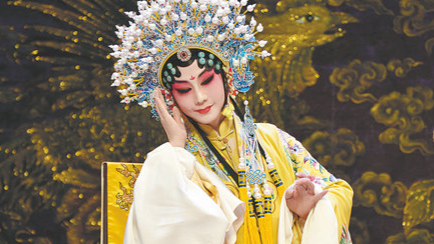
Wang Fang
Introduction
Wang Fang, a distinguished Kunqu Opera artist from Suzhou in Jiangsu province, has dedicated her life to this traditional art form. Twice a recipient of the Plum Performance Award, the highest honor in Chinese theater and opera, Wang has become a pivotal figure in the revival and promotion of Kunqu Opera. Her career, spanning over four decades, reflects her unyielding passion and resilience in preserving one of China's oldest operatic traditions.
Early Life
Born in Suzhou, Wang Fang displayed a natural talent for singing and dancing from an early age. Her performances as a child garnered attention, leading to an invitation to join the Suzhou Kunqu Opera Troupe while she was still in middle school. Initially, her parents were hesitant, prioritizing her education over an uncertain artistic career. However, the troupe's persistence eventually convinced them to allow Wang to pursue her passion.
The training was grueling. Wang began by mastering pronunciation, lyrical singing, and graceful movements. As a martial artist actress, she endured rigorous kung fu practice, often pushing her physical limits. Summers left her drenched in sweat, while winters brought chilblains from rehearsals in unheated classrooms.
Artistic Style
Initially indifferent to Kunqu Opera, Wang's perspective changed in her early 20s when she watched Zhang Jiqing's performance of Peony Pavilion. The elegance, precision, and emotional depth of Zhang's portrayal profoundly moved her, igniting a lifelong love for the art form. Wang's own style is characterized by her ability to seamlessly blend poetry, music and dance, creating performances that resonate deeply with audiences. She emphasizes the immersive process of interpreting and presenting Kunqu's intricate artistic elements.
Career Highlights
Over the years, Wang Fang has emerged as a master of Kunqu Opera, captivating audiences both in China and abroad. Her international performances have introduced this ancient art to global audiences, who, despite language barriers, appreciate its aesthetic beauty.
However, Wang's career was not without challenges. From the mid-1980s to the late 1990s, Kunqu Opera faced a decline in popularity. Troupes struggled to attract audiences, and some disbanded. The Suzhou Kunqu Opera Troupe resorted to free performances, often playing to nearly empty venues. During this period, Wang took a part-time job at a wedding photography studio to supplement her income but ultimately returned to the troupe, driven by her unwavering passion for Kunqu.
Influence and Legacy
Kunqu's fortunes began to shift in the 21st century. In 2001, it was designated a UNESCO Intangible Cultural Heritage, sparking renewed interest. Support from the provincial government and cultural organizations played a pivotal role in its revival. Since 2007, Suzhou has offered free Kunqu performances and lectures to students, reaching over 400,000 young people. Many of these students have gone on to become professional performers.
Wang Fang has been instrumental in this resurgence. Her efforts to modernize and adapt Kunqu for younger generations have made the art form more accessible. She has also mentored emerging artists, ensuring the continuity of this cultural treasure. Suzhou's establishment of Kunqu theaters has provided spaces for performers to hone their craft and engage with diverse audiences.








